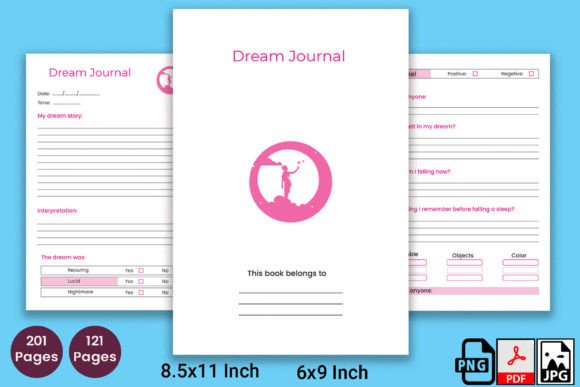
My Sweet Dream Journal Coloring Interior: A Practical Tool for Creatives, Therapists, and Self-Publishers
If you’ve ever stared at a blank journal page wondering where to begin—or worse, spent hours formatting a KDP interior only to get rejected for bleed or resolution issues—you’ll appreciate how My Sweet Dream Journal Coloring Interior solves real problems before they happen. This isn’t just another coloring template. It’s a field-tested, production-ready asset built by designers who’ve uploaded hundreds of low-content books on Amazon KDP—and learned exactly what works (and what doesn’t).
What Actually Happens When You Use This Interior?
Imagine this: You’re launching your first guided dream journal. You want soft florals, gentle line art, and space for reflection—but also flexibility. With My Sweet Dream Journal Coloring Interior, you open the PDF, resize a page in Adobe Illustrator without pixelation, swap a floral border for a celestial motif, adjust margins for perfect binding, and export a print-ready file—all in under 20 minutes. No re-rasterizing. No guessing at KDP’s 0.125" margin rules. No last-minute panic over “content too close to edge” warnings.
That speed matters—especially if you’re managing multiple niches (e.g., gratitude journals, sleep trackers, manifestation workbooks) or running a small publishing side hustle. One user told us she launched three themed journals in one week using this interior as her base—changing colors, fonts, and cover copy while keeping the same trusted layout structure.
Real People, Real Situations Where It Fits Naturally
- Creative therapists and coaches: Use the 121–201 page range to build structured reflection tools—like a 90-day dream recall workbook with weekly coloring prompts and guided questions. The editable vector format means you can insert client-specific affirmations or clinical frameworks without starting from scratch.
- Self-publishing students and beginners: If you're learning KDP but don’t yet know how to set up CMYK profiles or handle trim vs. bleed zones, this interior removes friction. It’s pre-validated: tested on Amazon, no upload errors, no hidden rasterization traps. Think of it as training wheels that don’t hold you back—they help you ship faster.
- Print-on-demand shop owners: Need consistent interiors across product lines? This design scales cleanly from 6×9 to 8.5×11, so you can offer both pocket-size dream diaries and larger studio-style coloring journals—same core assets, different use cases.
- Mindfulness educators: Teachers leading workshops on restorative sleep or lucid dreaming often hand out printable pages. The included high-res JPG and PNG files (300 DPI) let you drop single pages into lesson decks, email newsletters, or Canva social posts—no quality loss, even when zoomed.
Why “Vector + Editable” Makes a Tangible Difference
Most coloring interiors you find are raster-based—meaning if you try to enlarge a flower motif to fill half a page, it blurs. Not here. Because My Sweet Dream Journal Coloring Interior is built in vector (Adobe Illustrator compatible), every line, curve, and shape resizes crisply at any dimension. That’s critical when you realize:
- You want to test a larger version for older adults with visual preferences—so you scale the entire layout to 8.5×11 without distortion.
- Your brand uses a specific Pantone blue, and you need to recolor all line art consistently—not manually, but via global swatch replacement.
- You’re bundling digital + physical versions and need clean PNG exports for web use—no jagged edges, no background artifacts.
And yes—it’s truly “no bleed.” That means zero risk of important elements getting cut off during printing. You won’t lose the delicate vine border around a “Dream Recall” prompt because the design respects KDP’s safe zone by default.
Things to Keep in Mind Before You Start Customizing
This interior shines brightest when you understand its sweet spot: structured creativity. It’s not meant for dense text-heavy content (like novels or academic guides), nor is it optimized for ultra-minimalist monochrome fans who prefer stark white space. Instead, it’s ideal for users who want gentle visual scaffolding—enough design to inspire, not so much that it overwhelms.
A few practical notes:
- Fonts aren’t embedded—so if you change body text, pick Google Fonts or system-safe options (like Merriweather or Lora) that render well in KDP’s previewer.
- Color mode is CMYK-ready, but if you’re adding photos or overlays, double-check saturation—some bright pinks or cyans shift slightly on press. Soft proofing in Illustrator helps.
- Page count is flexible, but KDP rewards multiples of 24 for perfect binding. The included 121 or 201 pages? They’re designed to round cleanly to standard signatures—no wasted pages, no awkward blank spreads.
Who Might Look Elsewhere—and Why
If your goal is fully automated journal generation (e.g., AI-populated daily prompts with dynamic date fields), this interior doesn’t include scripting or variable data features—it’s static, intentional, and human-curated. Likewise, if you need bilingual layouts (English + Spanish side-by-side) or complex grid systems for habit tracking, you’d layer those on top rather than rely on built-in functionality.
But for the vast majority of creators—those building calm, beautiful, emotionally resonant journals grounded in real use—it delivers more than aesthetics. It delivers confidence. Confidence that your file will pass KDP’s auto-check. Confidence that your coloring lines stay sharp whether printed on matte or premium paper. Confidence that your audience opens the journal and feels invited—not intimidated.
More Than a Template—A Launchpad
One illustrator shared how she used the “three color variations” feature to create seasonal editions: lavender-and-mint for spring dreams, warm amber-and-cream for autumn reflection, deep navy-and-gold for winter intention-setting. Same structure. Same flow. Entirely new emotional resonance.
That’s the quiet power of My Sweet Dream Journal Coloring Interior: it holds space—not just on the page, but in your process. It lets you focus on voice, audience, and purpose instead of wrestling with technical debt. Whether you’re guiding others toward restful sleep, building a scalable KDP catalog, or simply creating something tender and true for yourself—it meets you where you are, and helps you go further, faster.