Why an Editable Medication Log Canva Template Is a Lifesaver for Caregivers, Patients, and Health Professionals
Keeping track of medications manually—scribbling doses on sticky notes, flipping through paper calendars, or juggling multiple apps—adds unnecessary stress to already demanding health routines. Whether you’re managing your own chronic condition, supporting an aging parent, coordinating care for a child with complex needs, or running a small wellness practice, consistency and accuracy matter. That’s where a thoughtfully designed Medication Log Canva Template steps in—not as just another printable—but as a flexible, professional-grade tool built for real-world use.
What Makes This Medication Log Different From Generic Printables?
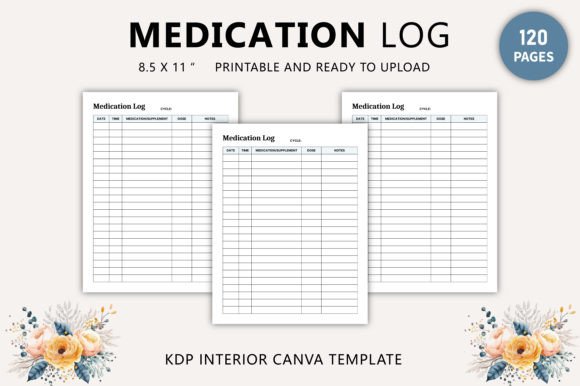
Not all medication logs are created equal. Many free downloads are low-resolution, lack structure, or force rigid layouts that don’t adapt to individual needs. This Editable Medication Log Canva Template solves those problems at the source. It’s not a static PDF you print and abandon after one week—it’s a living document you control.
Inside the package, you’ll receive:
- An editable Canva link—no design skills required. Change fonts, colors, labels, or layout elements in seconds.
- A print-ready PDF file, professionally formatted at 8.5 x 11 inches, 300 DPI, and CMYK color—ideal for home printers or commercial print shops.
- High-fidelity JPG and PNG files for digital reference, sharing with providers, or embedding into care coordination platforms.
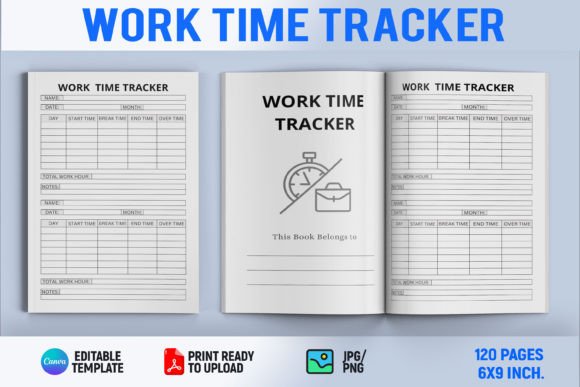
- A full 120-page interior, thoughtfully organized—not bloated, not sparse—with room for daily tracking, refill reminders, symptom notes, and provider contact logs.
- No bleed, so nothing gets cut off during printing—clean edges every time.
This isn’t clipart slapped onto a grid. It’s a 100% original design, built with clinical clarity and human-centered usability in mind. The spacing is generous. The typography is legible at a glance. The headers are intuitive—not cryptic abbreviations. And because it’s built in Canva, you can duplicate pages, add checkboxes, insert icons, or even translate sections for bilingual households.
How Real People Use the Editable Medication Log Canva Template
Consider Maria, a nurse practitioner who runs a telehealth practice focused on geriatric care. She sends her patients the editable Canva link before their first visit. They customize columns to match their actual prescriptions—adding insulin timing, inhaler counts, or over-the-counter supplements that often get overlooked. During appointments, she reviews their filled-in logs side-by-side with EHR data—and catches discrepancies faster than ever.
Then there’s James, a high school teacher managing ADHD medication for his 10-year-old daughter. He used to forget whether she’d taken her midday dose—until he added a simple “✅ Taken / ❌ Missed” toggle to each row using Canva’s button shapes. He prints one page per week, sticks it on the fridge, and crosses off doses with a dry-erase marker. When her pediatrician asked for adherence history, he simply exported the last four weeks as PDFs and emailed them.
And for small business owners? Think wellness coaches, home health aides, or occupational therapists building client resource kits. They embed the Medication Log Canva Template into branded onboarding packets—changing the header font to match their logo, adding their website URL in the footer, and exporting clean, consistent PDFs for every client. No reformatting. No licensing headaches. Just plug-and-play professionalism.
Design Choices That Actually Improve Compliance
Good health tools don’t just look nice—they reduce friction. This template reflects evidence-backed habits:
- Time-based columns (e.g., “7 AM,” “12 PM,” “8 PM”) instead of vague “Morning/Evening”—helping users align doses with circadian rhythms and meal schedules.
- Space for notes next to each entry: not just “what was taken,” but “how did they feel after?” or “any side effects?” That context helps spot patterns—like fatigue after a specific antihypertensive—or flag interactions early.
- Dedicated refill tracker with visual progress bars (customizable in Canva), so users see at a glance when it’s time to call the pharmacy—not when the bottle runs empty.
- Provider contact log with fields for name, specialty, phone, and last appointment date—because coordinating care shouldn’t mean digging through old texts or voicemails.
None of this is theoretical. These features emerged from feedback across dozens of caregivers, clinicians, and patients—people who tried everything from Excel spreadsheets to smart pill dispensers and still came back to pen-and-paper hybrids. Why? Because simplicity builds habit. And habit builds safety.
Customization Without Compromise: What You Can—and Should—Change
The editable Canva link gives you full creative control—but not all changes are equally helpful. Here’s what works best:
- Add or remove columns based on need: swap “Dose” for “Route (oral/inhalation/topical)” if that’s more relevant, or collapse two less-used meds into one combined row.
- Adjust color coding by medication class—blue for blood pressure meds, green for vitamins, red for PRN (as-needed) drugs—so visual scanning takes under two seconds.
- Insert your own icons (Canva’s library includes FDA-approved symbols like syringes, pills, and warning triangles) to support low-literacy users or children learning self-management.
- Translate headers into Spanish, Tagalog, Vietnamese, or other languages common in your household or practice—without losing alignment or readability.
What *not* to change? Don’t shrink font sizes below 10 pt for body text or sacrifice line height—clarity trumps density. And avoid overloading pages with decorative borders or watermarks; they distract from the core task: recording accurately and acting confidently.
Printing, Sharing, and Long-Term Use—No Guesswork Required
You’ll get a print-ready PDF file optimized for reliability. At 300 DPI and CMYK, it renders crisply on laser printers, inkjets, and commercial presses—no fuzzy lines, no washed-out grays. Since it’s sized to standard letter dimensions (8.5 x 11 inches) with no bleed, you won’t waste paper trimming margins or risk cutting off critical headers.
Need digital access? Export as JPG or PNG for tablets, shared drives, or encrypted email. Want to handwrite but keep backups? Scan completed pages into a folder labeled “Med Log – Q3 2024” and store it alongside your insurance cards and advance directives.
And because the template spans 120 pages, it supports long-term tracking—no frantic reprints every month. One download covers four months of daily logs, plus bonus pages for goal setting, symptom mapping, and medication history summaries. That continuity matters. It turns isolated data points into meaningful trends.
Final Thought: A Tool That Grows With Your Needs
A Medication Log Canva Template isn’t about perfection. It’s about reducing cognitive load so you can focus on healing, caregiving, or thriving—not paperwork. It’s adaptable enough for a college student managing anxiety meds, precise enough for a hospice nurse documenting palliative protocols, and elegant enough to sit beside your favorite planner without looking out of place.
When you choose this editable version, you’re not buying a static sheet—you’re investing in flexibility, clarity, and peace of mind. You get the confidence of professional design, the freedom of full customization, and the convenience of instant delivery—all in one seamless package. Whether you're preparing for a doctor’s visit, training a new caregiver, or building a client-facing resource, this is the kind of tool that quietly makes everything else work better.